

How to Get a Contractor License in Georgia: Requirements and License Types
Contractor reviewing house framing plans on a residential job site in Georgia
Starting a trade business means more than being good at the trade. You need the right licenses, a legal structure, a bank account and, sooner or later, employees.
These guides walk through each step, with links to the state agencies and federal sources that set the rules. Start with How to Start a Contracting Business, then decide whether you need an LLC and what a contractor license bond costs.
Licensing rules vary widely by state. We cover the requirements in California, Florida and Texas, and we link to each state’s licensing board so you can confirm current fees and steps.
When you’re ready to grow, read about business bank accounts and hiring your first employee. These guides are general information, not legal advice.
Contractor reviewing house framing plans on a residential job site in Georgia
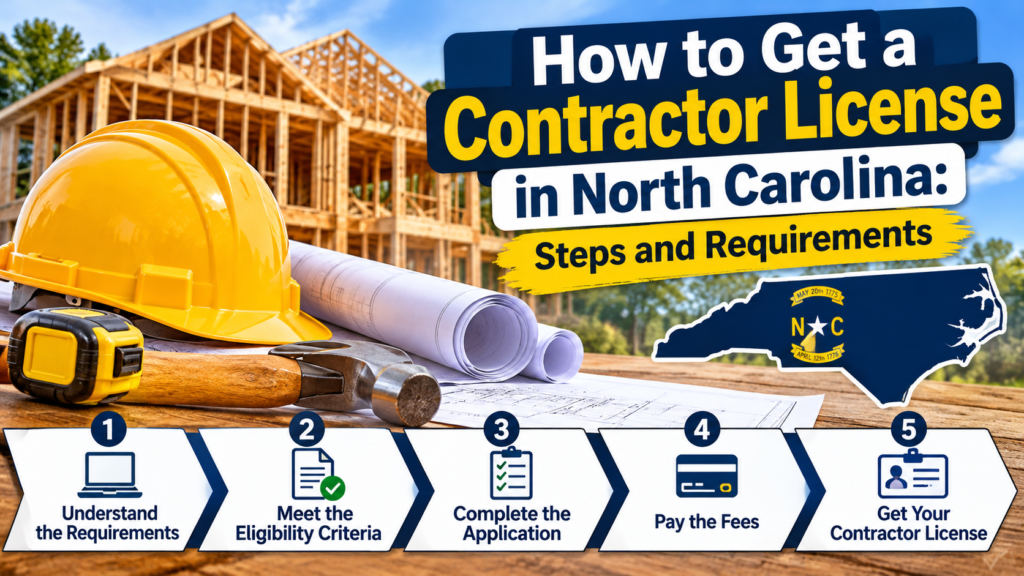
General contractor reviewing building plans for a North Carolina construction project
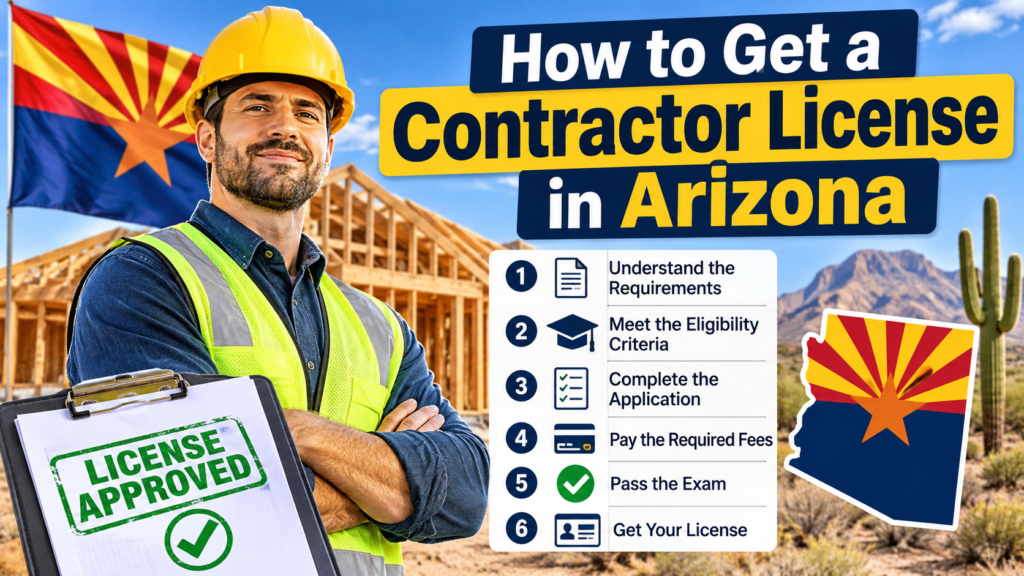
Contractor reviewing Arizona contractor license application documents

Contractor reviewing a surety bond agreement for a public construction project
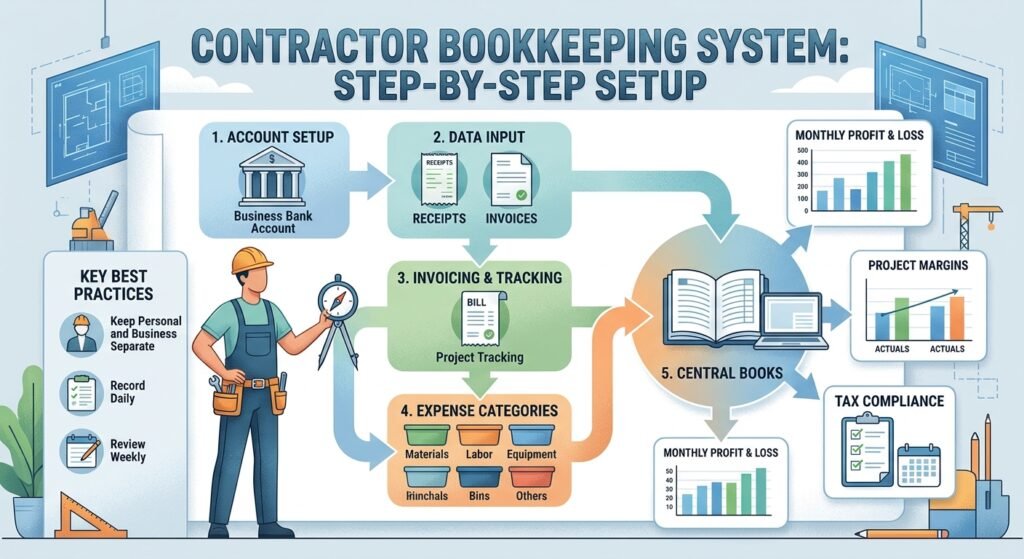
Contractor organizing receipts and invoices on a laptop with accounting software

Payroll for small contractors: compare doing it yourself with payroll software, see the real costs, penalties to avoid and construction features you need.

Hire your first employee as a contractor the right way: true cost per hour, payroll and tax setup, workers’ comp, required forms and onboarding.

LLC for contractors: see what it protects, what it doesn’t, what it costs, how it affects licensing and when forming one is actually worth it.

A contractor license bond protects your clients, not you. Learn how it works, what it costs, how credit affects your premium and how to get bonded fast.

Get your California contractor license: the $1,000 rule, CSLB experience and exams, the $25,000 bond, workers’ comp changes and total costs explained.