

LLC vs. S Corp for Contractors: When the Switch Saves Money
LLC vs. S corp for contractors: how the S corp election saves self-employment tax, reasonable salary rules, added costs, state taxes and how to find your break-even point.
When you work for yourself, nobody withholds taxes from your pay. You estimate them, pay them during the year and keep the records to back up every deduction.
These guides explain how that works for contractors and trade businesses, based on IRS rules and publications. Start with Taxes for Self-Employed Contractors, then see how much to set aside from each payment.
For filing and deductions, read our Schedule C walkthrough, Section 179 for tools and equipment and tax deductions for electricians. If you hire help or are weighing a new structure, see 1099 vs. W-2 for your crew and LLC vs. S corp.
To estimate your own figures, use the quarterly estimated tax calculator and the truck mileage deduction calculator. These guides are general information, not tax advice; confirm your situation with a CPA or enrolled agent.
LLC vs. S corp for contractors: how the S corp election saves self-employment tax, reasonable salary rules, added costs, state taxes and how to find your break-even point.

A line-by-line Schedule C walkthrough for contractors: income, expenses, vehicle, depreciation, materials and what doesn’t belong on the form, with an example.

1099 vs. W-2 for construction workers: the IRS, Department of Labor and state ABC tests, warning signs, real subcontractors vs. misclassified laborers and how to fix mistakes.

How Section 179 works for contractors in 2026: limits, qualifying tools and equipment, financed purchases, bonus depreciation, vehicles, recapture and state rules.

Tax deductions for self-employed electricians: tools, protective gear, licenses, CE courses, vehicle and insurance, plus what you can’t write off and how to keep records.

Taxes for self-employed contractors: income and self-employment tax, 2026 brackets, quarterly payments, Schedule C, 1099 rules and key deductions.
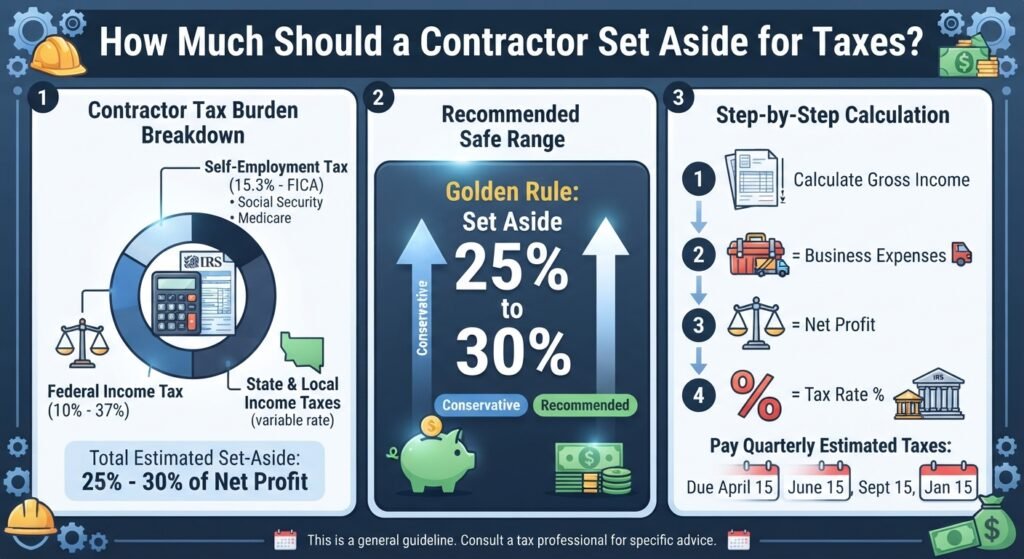
How much should a contractor set aside for taxes? Calculate your own percentage with a 2026 example, convert it to a per-payment rule and avoid a surprise tax bill.