

How to Bid on Government Construction Contracts as a Small Contractor
Small contractor preparing a bid for a public construction project
A job can look profitable and still lose money once overhead, extra hours and unpaid change orders are counted. Pricing is where most of a contractor’s profit is won or lost.
These guides show how to build a price from real costs and protect it until you get paid. Start with How to Price Contracting Jobs, then learn to write an estimate clients accept and choose between flat rate and time and materials.
Once the job starts, read how to handle change orders and get paid faster. For hourly pricing by trade, see our guides for plumbers and electricians.
To check your numbers, use the hourly rate, overhead rate, markup to margin and job costing calculators.
Small contractor preparing a bid for a public construction project

Contractor reviewing a profit and loss statement with revenue, job costs and net profit

Get paid faster as a contractor with deposits, progress billing, clear invoices and late fees, plus a follow-up plan that collects without losing clients.

Change orders for contractors: get every scope change priced, signed and paid with a simple process, pricing formula and wording that avoids disputes.
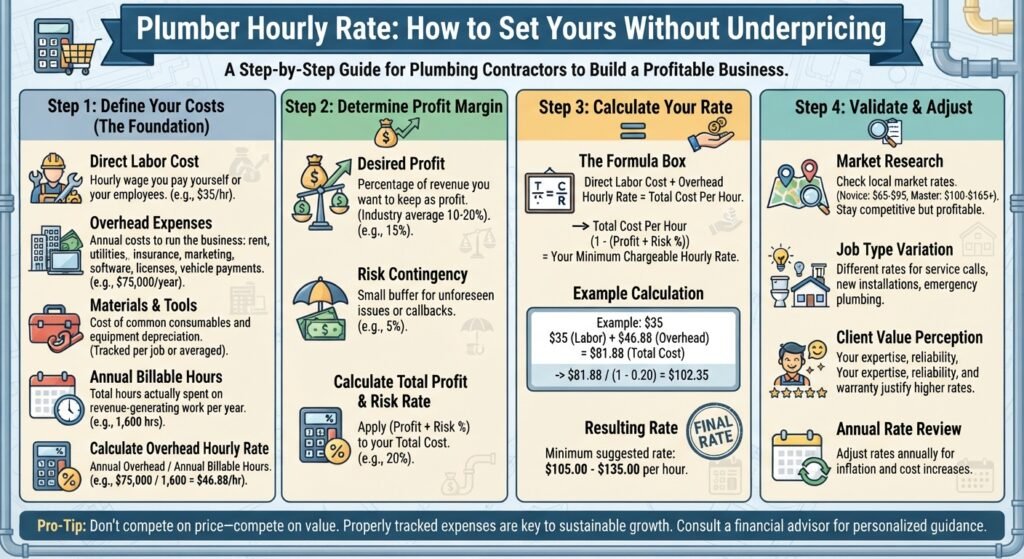
How to set a plumber hourly rate that covers pay, overhead, equipment, callbacks and profit, with a full example, BLS wage data and signs you’re underpricing.
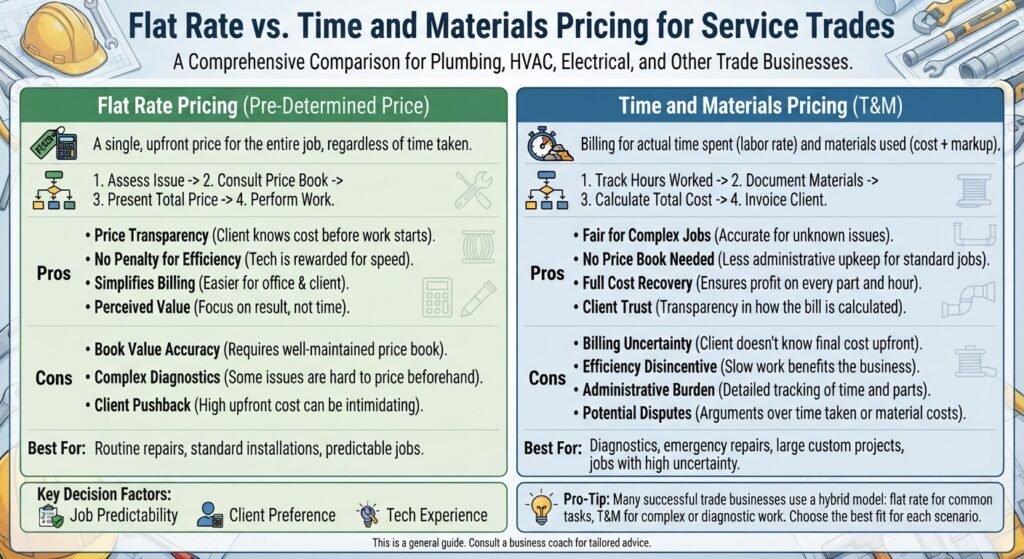
Flat rate vs. time and materials pricing: learn when each protects your margin, how to build flat rates and when to use a hybrid model.

How to price contracting jobs step by step: burdened labor, materials, equipment, overhead, contingency and profit margin, with a complete worked example.

Write contractor estimates clients say yes to: what to include, how to present price and options, payment terms and follow-up steps that win more jobs.
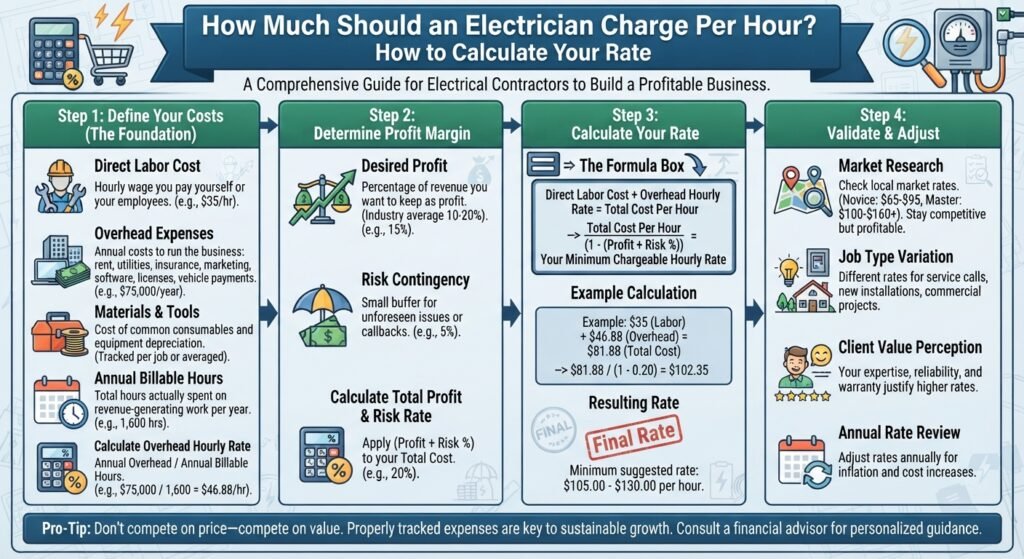
How much should an electrician charge per hour? Calculate your rate from pay, benefits, overhead, billable hours and profit, with a full example and 2025 BLS wage data.